


Studentsamskipnaden Sammen
At Studentsamskipnaden Sammen in Western Norway, a pilot project was launched to address persistent challenges in domestic hot water circulation across multiple residential buildings.

Introduction
At Studentsamskipnaden Sammen in Western Norway, a pilot project was launched to address persistent challenges in domestic hot water circulation across multiple residential buildings. The objective was to improve system control, eliminate hygiene risks, and reduce energy consumption while ensuring a stable and comfortable indoor environment for residents.
By implementing a new generation of pressure-independent control valves with integrated measurement and digital capabilities, the project enabled a shift from limited system visibility to real-time, data-driven operation.
“The real difference is not just control, it’s visibility. For the first time, we can see exactly how our domestic hot water system is performing in real time. That insight allows us to act immediately, optimise energy use, and eliminate issues before they become problems.”
Jan-Kerim Boudali, Technical Manager and Energy & Environmental Advisor, Studentsamskipnaden Sammen
The Hydronic Challenge
Domestic hot water systems across the building portfolio presented multiple operational and performance challenges:
- Long waiting times for hot water
- Heat transfer from pipes negatively impacting indoor climate
- Legionella risk due to insufficient circulation
- Limited visibility of actual system performance
- Higher-than-expected energy consumption
Detailed system analysis revealed that domestic hot water represented a significant share of overall energy use. More critically, the investigation exposed fundamental system issues that had previously gone undetected.
In several cases, six risers had no circulation at all, while entire circuits were completely blocked. Water stagnation led to discolouration, odour, and increased hygiene risks.
Traditional systems measured the temperature in the common return pipe, but not the flow in every single riser, meaning correct readings could mask the absence of circulation, leaving critical faults hidden.
The Solution*
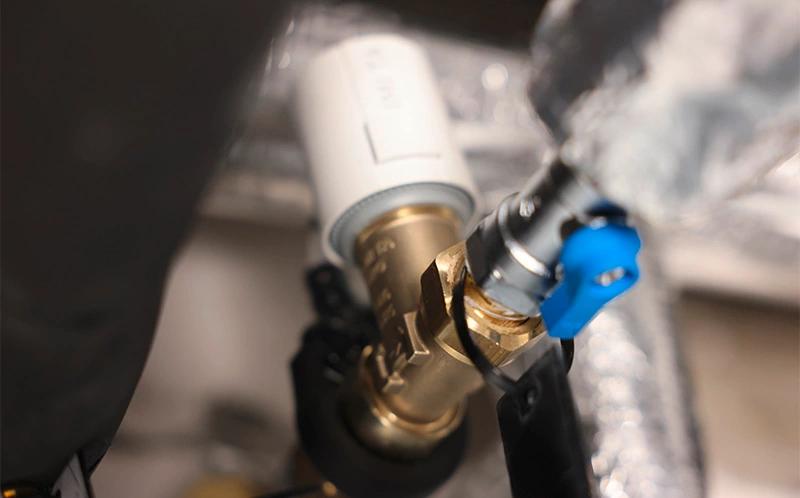
To address these challenges, a pilot project was implemented using IMI’s TA-Ctrl-T pressure-independent 2-way control valves, specifically developed for domestic hot water circulation.
The solution combines:
- Precise flow and temperature control
- Integrated measurement and continuous data logging
- Wireless communication
- Adaptive temperature regulation
This enables stable circulation temperature independent of flow, while providing full visibility of system performance.
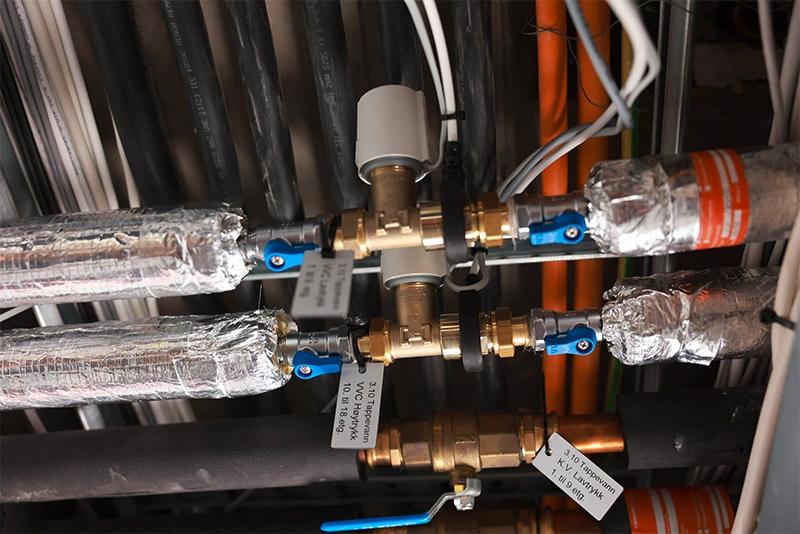
Installation was fast and efficient, with approximately 70 valves installed in half a day, demonstrating the plug-and-play nature of the solution and enabling rapid deployment. The valves were also integrated into the building management system, allowing automatic alerts and continuous monitoring.
By combining accurate control with real-time data, the system not only stabilised performance but also revealed previously hidden issues within the network, including blocked circuits and risers without circulation, enabling corrective action.
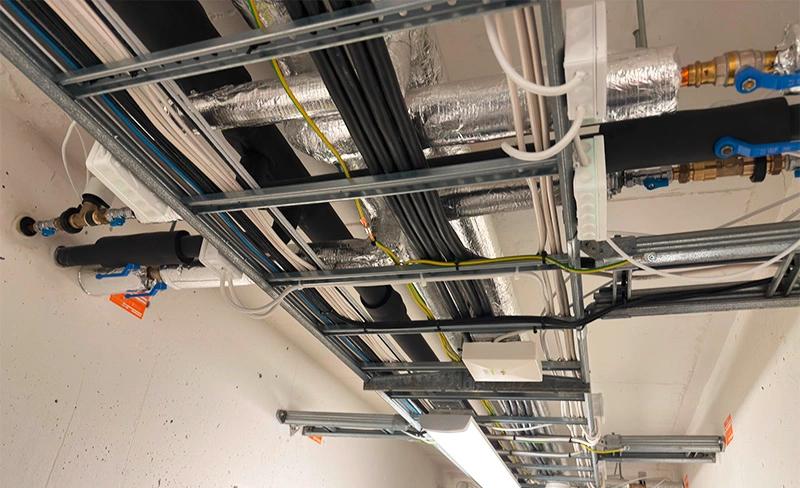
As a result, the solution delivered measurable improvements, including energy reductions of up to 20% in pilot buildings. As part of the wider system optimisation, the project delivered measurable energy savings, while TA-Ctrl-T helped ensure reliable and consistent domestic hot water circulation through improved control, monitoring and visibility.
Following optimisation, the system was confirmed to be free of legionella.
The system also provides:
- Real-time alerts and diagnostics
- Mobile-based monitoring
- Continuous performance data for optimisation and long-term operation
“From an installation perspective, the solution is very straightforward. We were able to install around 70 valves in just half a day, without complex setup or adjustments. At the same time, it gives the customer a level of control and insight that goes far beyond traditional systems.”
Kevin M. Solheim, Managing Director, Kess VVS AS
Conclusion*
This project demonstrates how intelligent domestic hot water control can transform system performance in residential buildings.
By combining pressure-independent control with real-time data and system transparency, it is possible to:
- Reduce energy consumption
- Eliminate hygiene risks
- Improve indoor comfort
- Reveal and resolve hidden system inefficiencies
Following the success of the pilot, the solution is now being scaled across the building portfolio, with over 70 valves already in operation and plans to exceed 100 units.
For IMI, this reflects a broader industry shift, where data-driven hydronic control, system visibility, and self-diagnostics are becoming the new standard.
* All performance figures and other data referenced in this case were provided by the customer. IMI has not independently verified this information, and actual results may vary depending on system design and operating conditions