

Hybrid Heating for a Smarter, More Efficient Home
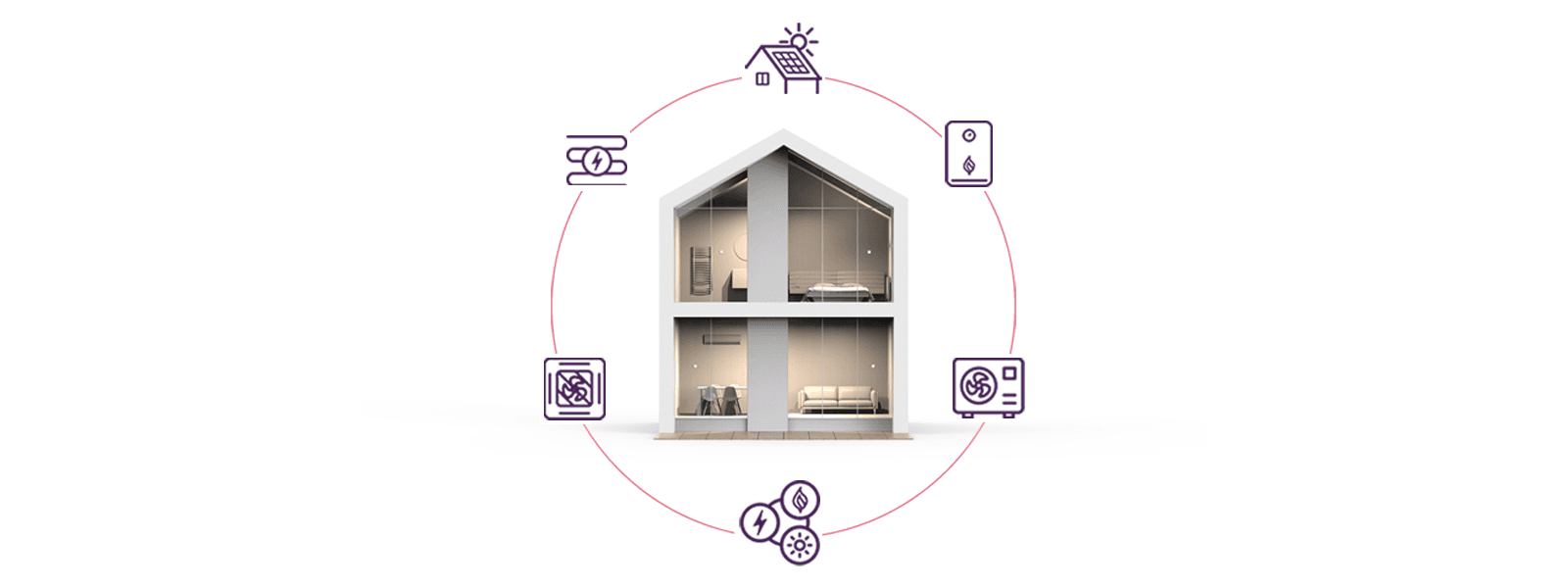
Hybrid Heating for Modern Homes
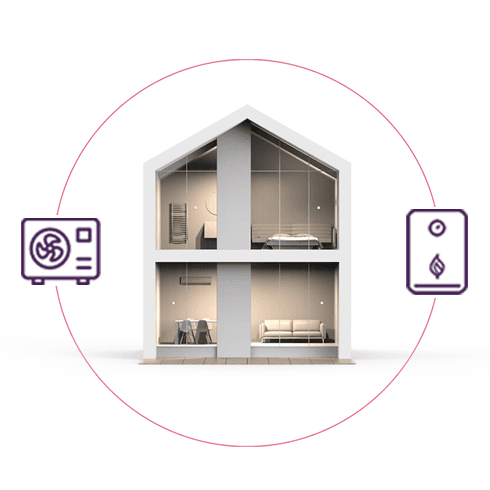
Hybrid heating combines two or more heat sources to give you the perfect balance of comfort, efficiency, and reliability. It keeps your home warm all year while helping to lower energy use and running costs.
When temperatures drop or demand increases, your system automatically switches to the most efficient source — for example, using a low-carbon heat pump most of the time, then calling on a boiler only when extra warmth is needed.
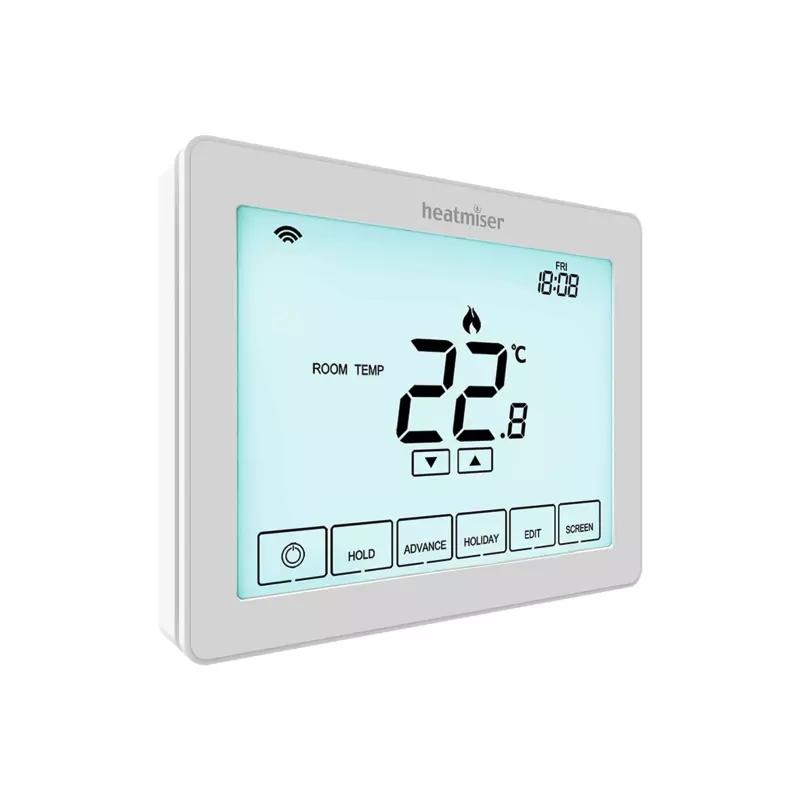
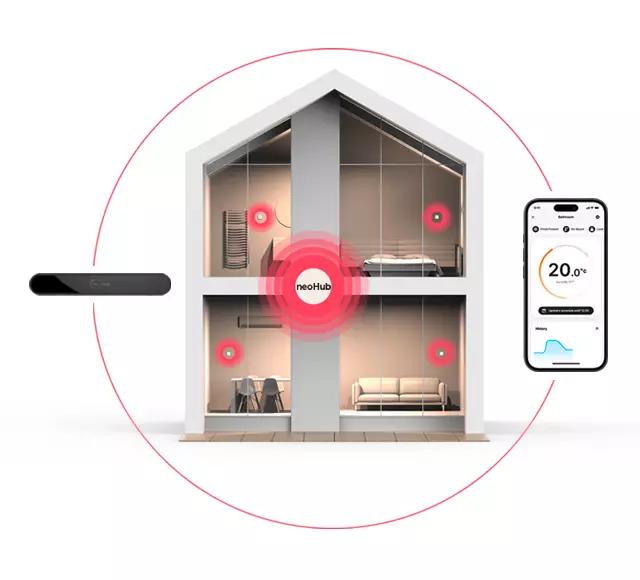
With IMI Heatmiser smart controls, managing a hybrid system couldn’t be easier. Set room-by-room schedules, view performance, and fine-tune temperatures directly from your phone. The system works seamlessly with radiators, underfloor heating, or both, adapting perfectly to your home and lifestyle. Hybrid heating gives you dependable comfort with less environmental impact - and a system ready for the UK’s low-carbon future. See examples of these systems being used below.

The Future of Home Heating
Heating technology is changing fast — with new systems designed to make homes warmer, greener, and more efficient. Tomorrow’s homes will rely on cleaner energy sources such as hydrogen and electricity from renewable power, working together with smarter controls that choose the most efficient option automatically. Future hybrid systems will learn how you use your home, storing warmth when energy is cheapest and adjusting comfort levels to fit your routine. And because IMI Heatmiser controls are built for compatibility, your system today will be ready to work with the next generation of heating technologies — giving you lasting comfort and confidence in a low-carbon future.
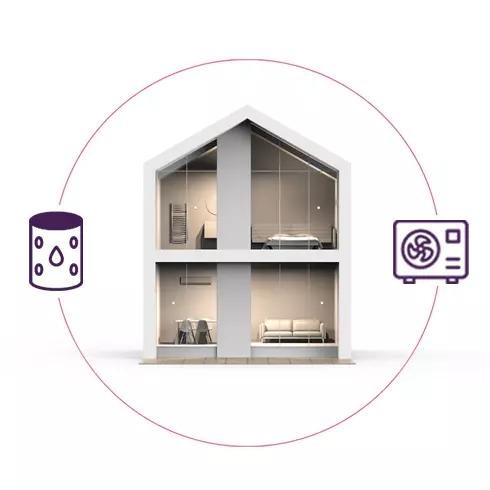
Heat Pump with Thermal Store or Buffer Tank
This hybrid setup pairs a heat pump with a thermal store that holds warm water ready for use around your home. The heat pump heats the water steadily and efficiently, while the stored heat is released to radiators, underfloor heating, or hot water whenever it’s needed.
By smoothing out demand, the system runs more quietly and efficiently, especially in larger or multi-room homes. Smart controls manage when the store is heated based on your heating needs, daily schedules, and even cheaper off-peak electricity — helping keep energy use and costs down without sacrificing comfort.
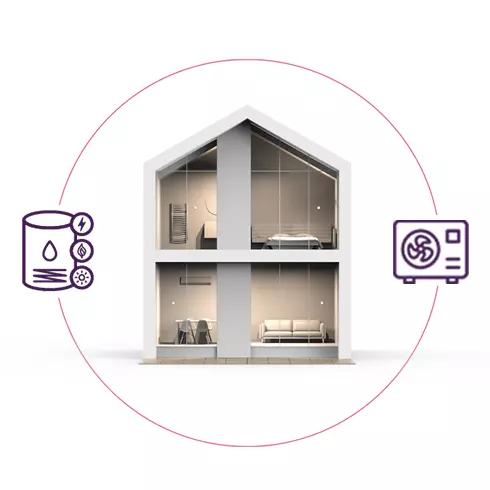
Heat Pump with Alternative Energy Support
In some homes, a heat pump can be supported by additional energy sources to maintain comfort and efficiency in all conditions. Boiler, or electric backup, or solar thermal can complement a heat pump installation, stepping in when demand is high, outdoor temperatures drop, or free solar energy is available.
Smart controls automatically manage how and when each source is used — prioritising renewable energy wherever possible and limiting backup operation to essential moments. The result is a flexible, future-ready heating system that delivers reliable comfort while keeping energy use and running costs under control.
Where IMI Solutions Add Value
Challenge | IMI Solution |
| Variable flow across mixed emitters | IMI Heimeier balancing valves, presettable TRVs |
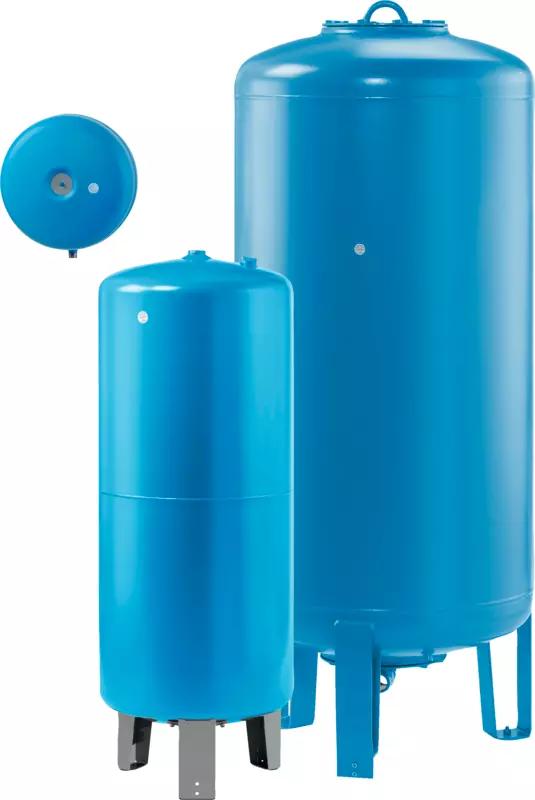
| Pressure stability during heat source changeover | IMI Pneumatex pressurisation vessels |
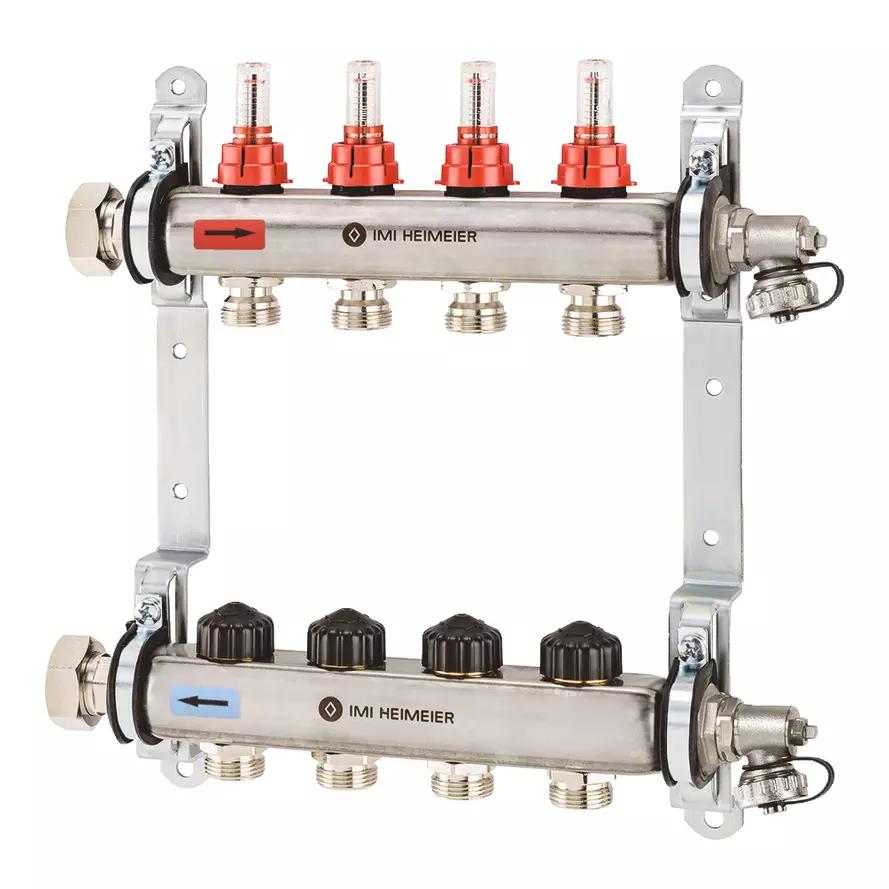
| UFH + Radiator integration | Mixing valves, actuators & manifolds |
| Smart source switching & thermostat control | neoStat Pro (comfort cooling), neoStat HC (fan coil) |
| Room-level optimisation | neoFlo radiator thermostat & zoning via neoHub |
| Installer setup & system management | Installer App, Pro Training & Enhanced History analytics |
How IMI can Integrate a Hybrid Heating System
IMI Heimeier components provide the hydronic stability required for hybrid operation, particularly in systems combining radiators, underfloor heating, and variable-temperature circuits from a heat pump. IMI Heatmiser products provide the full control layer: room thermostats, zoning, and automated switching between heat sources based on real-time demand and system rules.
Key contributions to hybrid design include:
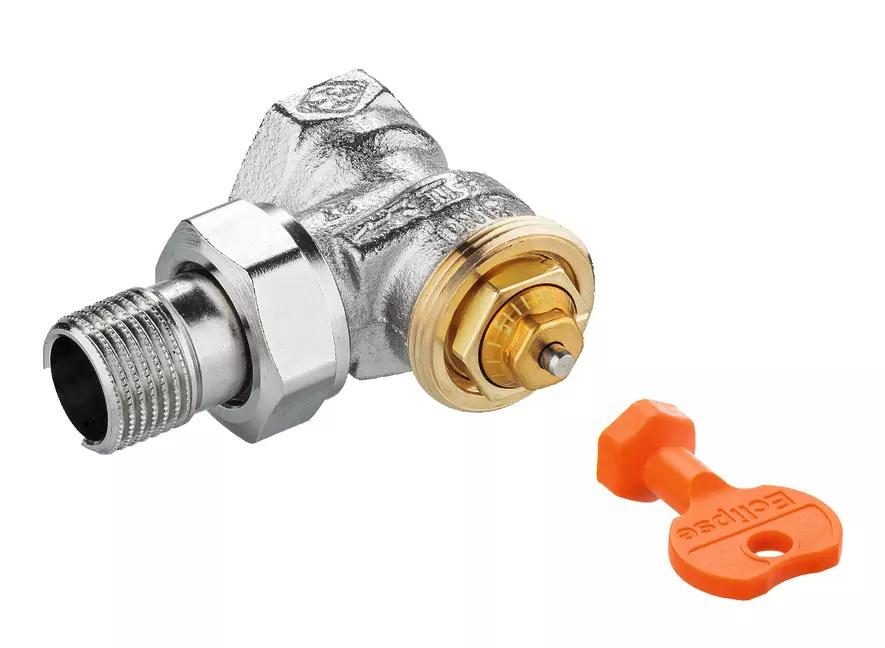
Radiator Control & Flow Limitation
Accurate radiator control ensures correct flow to each emitter, supporting efficient operation at lower heat pump temperatures. Controlled flow prevents overheating, improves system balance, and protects against excess flow when higher-temperature boiler circuits are active.
Differential Pressure & System Balance
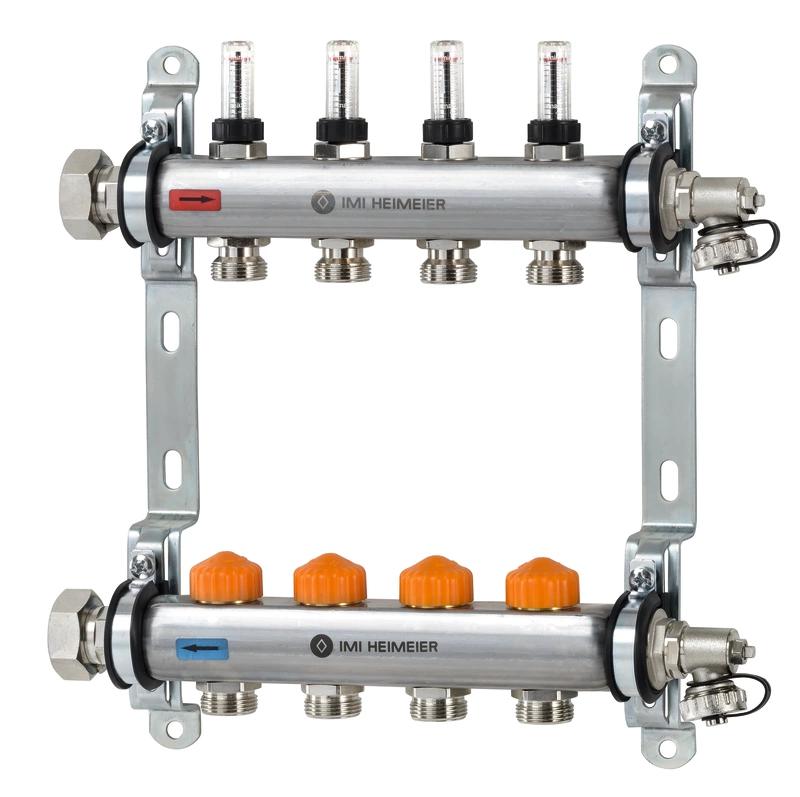
Stable differential pressure is essential in hybrid systems with variable demand. Dynamic balancing maintains consistent flow across zones, reducing noise, preventing overflow, and ensuring reliable heat distribution during pump modulation or source switching.
Mixed Systems (UFH + Radiators)
Hybrid systems often combine underfloor heating and radiators with different temperature demands. Dedicated manifolds and blending solutions maintain correct flow temperatures for each circuit, ensuring both systems operate efficiently within a single, coordinated heating design.
Zoning & Temperature Control
Room-by-room zoning allows individual control of underfloor and radiator circuits. Independent setpoints and schedules help manage varied heating demands, supporting hybrid systems where different emitters and heat sources must respond accurately and efficiently.
Products