

Understanding Hybrid Heating

Understanding Hybrid Heating
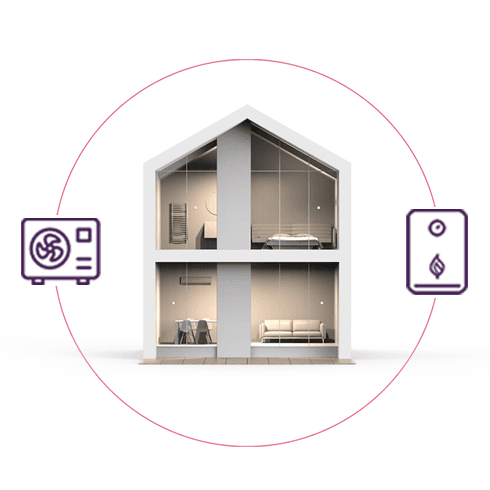
Hybrid heating combines two or more heat sources to deliver optimal comfort, energy efficiency and resilience. In most UK projects, this means pairing a heat pump (low-carbon base load) with a gas or electric boiler (peak support) during periods of high demand or low external temperatures.
Rather than relying on manual selection, hybrid performance depends on smart, automated control, allowing installers to ensure maximum heat pump efficiency while maintaining reliable response during peak conditions.
Hybrid System Logic – How It Works
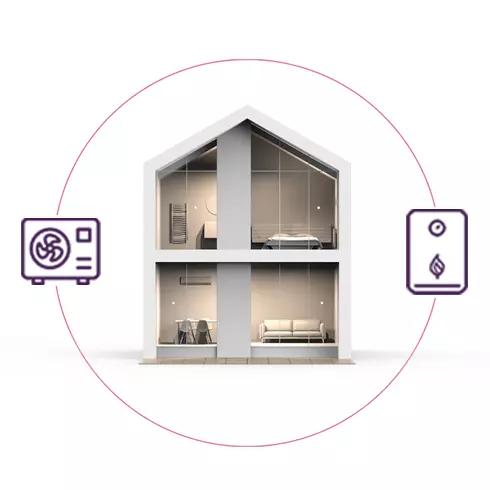
Heat Pump & Boiler System
Currently the most common hybrid setup in UK homes, especially during the transition to low-carbon heating.
How is this configured?
- An air source heat pump (ASHP) provides space heating for around 70–90% of the annual load.
- The gas boiler serves as a top-up or bivalent source during cold snaps, when the ASHP’s efficiency drops (known as the bivalence point).
A smart controller or hybrid manager automatically determines when to switch based on:
- Outdoor temperature (e.g. below 3°C, switch to gas)
- Flow temperature requirements
- System efficiency targets
- Energy tariffs (e.g. cheaper electricity periods)
- The result is a system that remains low carbon most of the year but retains resilience and responsiveness in peak conditions.
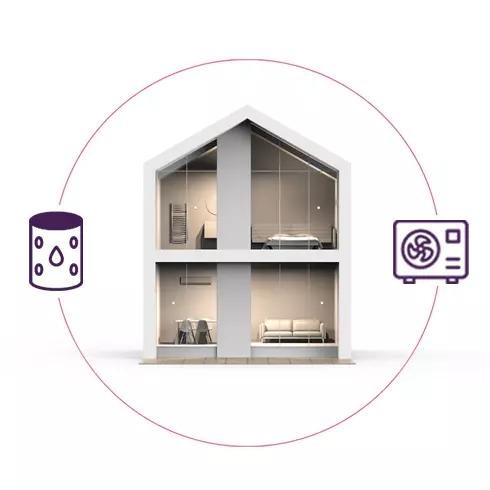
Air Source Heat Pump + Thermal Store / Buffer Tank
A heat pump is paired with a thermal store or buffer tank that stores heated water, smoothing system operation and improving efficiency. How is this configured? The air source heat pump heats the buffer tank gradually and efficiently. Stored heat is then distributed to radiators, underfloor heating, or hot water as needed. This setup improves heat pump stability, reduces cycling, and makes low-temperature heating systems easier to design and commission - especially in larger or multi-zone homes.
The buffer helps manage:
- Variable demand across zones
- Defrost cycles
- Low flow requirements of heat pumps
Smart controls determine when to charge the store based on:
- Heating demand
- Time schedules
- Energy tariffs (e.g. off-peak electricity)
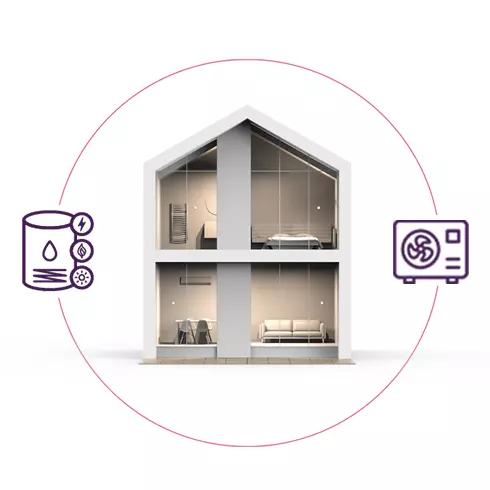
Heat Pump with Supplementary Heat Sources
In residential applications, air source heat pumps are increasingly supported by supplementary heat sources to improve resilience, efficiency, and system design flexibility. Depending on property type and energy strategy, this support may include electric backup, solar thermal, or a gas boiler.
The heat pump typically provides the majority of space heating at low flow temperatures. Electric elements or a boiler are enabled only when required — such as during extreme cold conditions, rapid recovery demand, or when system limits are reached. Solar thermal can contribute to domestic hot water production when available, reducing electrical load during warmer months.
Smart controls automatically manage source prioritisation based on temperature thresholds, demand, schedules, and tariff considerations, ensuring efficient operation while maintaining comfort and compliance across new builds and retrofit projects.
Where IMI Solutions Add Value
Challenge | IMI Solution |
| Variable flow across mixed emitters | IMI Heimeier balancing valves, presettable TRVs |
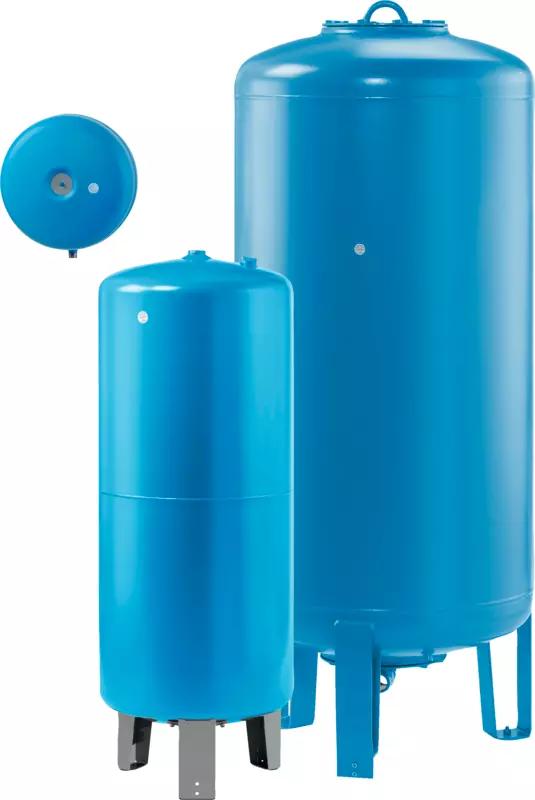
| Pressure stability during heat source changeover | IMI Pneumatex pressurisation vessels |
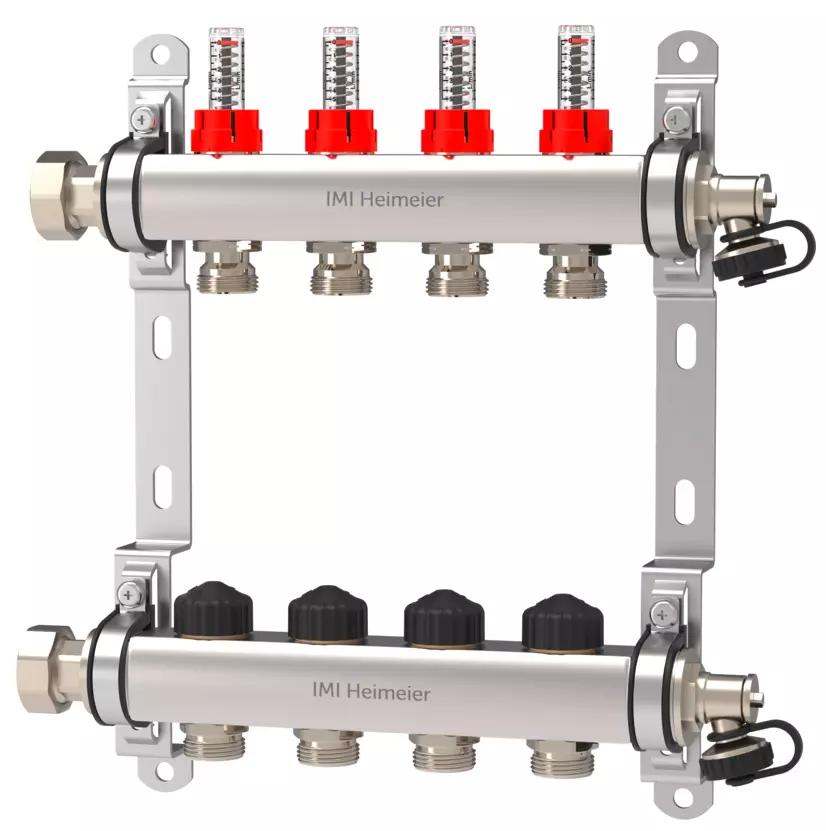
| UFH + Radiator integration | Mixing valves, actuators & manifolds |
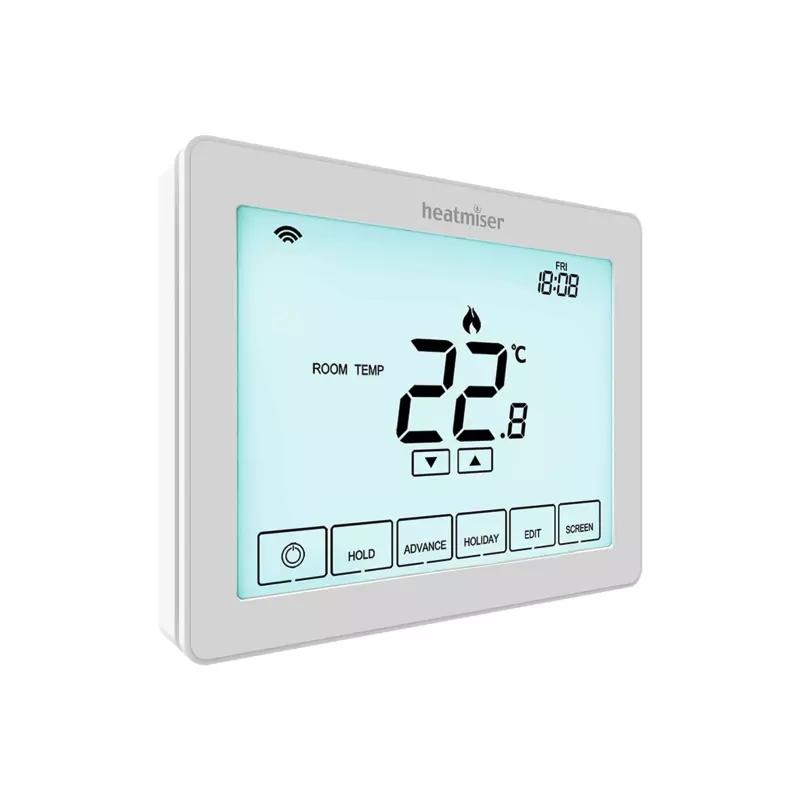
| Smart source switching & thermostat control | neoStat Pro (comfort cooling), neoStat HC (fan coil) |
| Room-level optimisation | neoFlo radiator thermostat & zoning via neoHub |
| Installer setup & system management | Installer App, Pro Training & Enhanced History analytics |
How IMI can Integrate a Hybrid Heating System
IMI Heimeier components provide the hydronic stability required for hybrid operation, particularly in systems combining radiators, underfloor heating, and variable-temperature circuits from a heat pump. IMI Heatmiser products provide the full control layer: room thermostats, zoning, and automated switching between heat sources based on real-time demand and system rules.
Key contributions to hybrid design include:
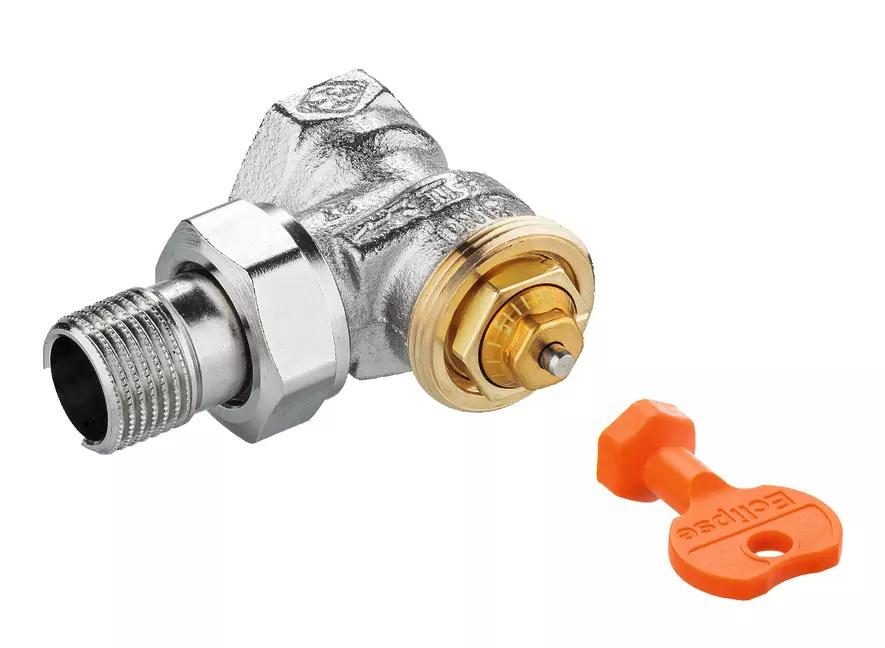
Radiator Control & Flow Limitation
Accurate radiator control ensures correct flow to each emitter, supporting efficient operation at lower heat pump temperatures. Controlled flow prevents overheating, improves system balance, and protects against excess flow when higher-temperature boiler circuits are active.
Differential Pressure & System Balance
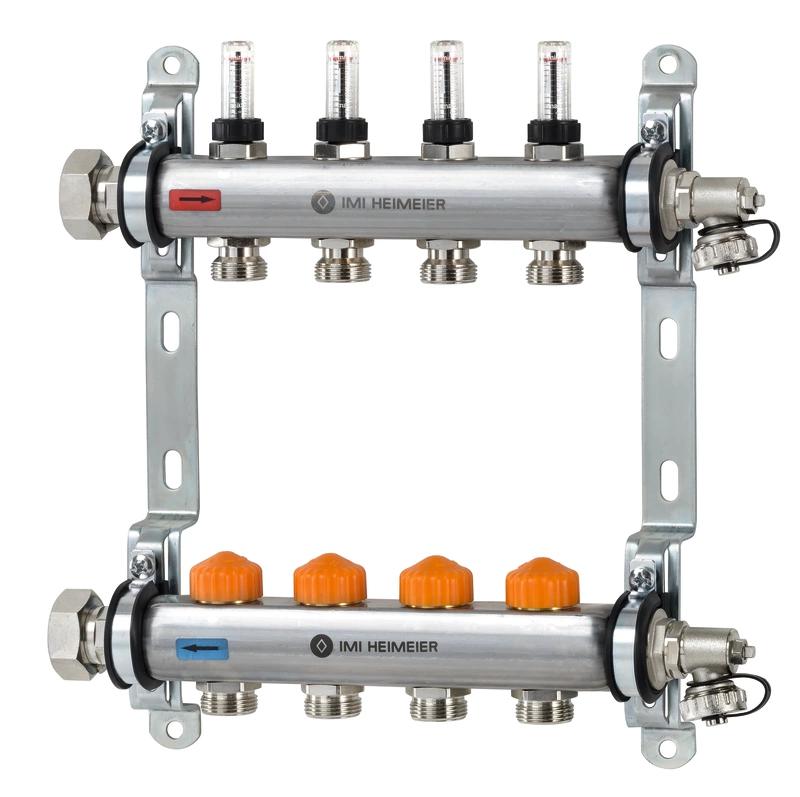
Stable differential pressure is essential in hybrid systems with variable demand. Dynamic balancing maintains consistent flow across zones, reducing noise, preventing overflow, and ensuring reliable heat distribution during pump modulation or source switching.
Mixed Systems (UFH + Radiators)
Hybrid systems often combine underfloor heating and radiators with different temperature demands. Dedicated manifolds and blending solutions maintain correct flow temperatures for each circuit, ensuring both systems operate efficiently within a single, coordinated heating design.
Zoning & Temperature Control
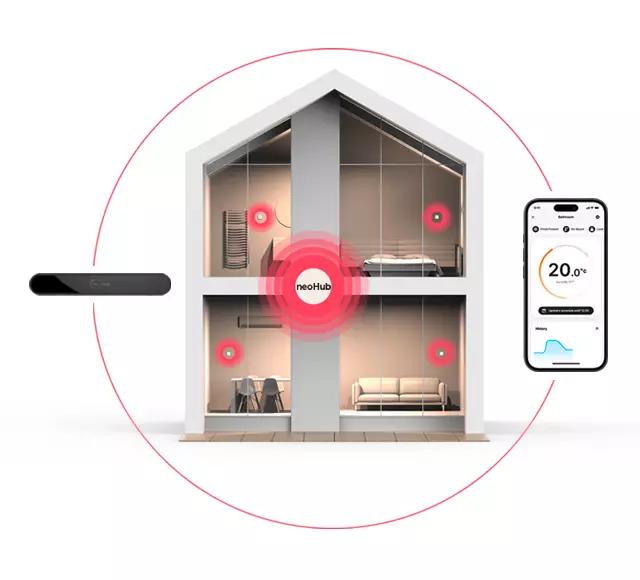
Room-by-room zoning allows individual control of underfloor and radiator circuits. Independent setpoints and schedules help manage varied heating demands, supporting hybrid systems where different emitters and heat sources must respond accurately and efficiently.
Products